WhatsApp for Nigerian Pilates Studios: Class Booking, Monthly Membership, Corporate Wellness, and Instructor-Certification Discipline
- The Nigerian Pilates Market: Who the Clients Are and How They Communicate
- The WhatsApp Communication Flow for a Pilates Studio
- Payment Collection for Nigerian Pilates Studios
- Health Data and NDPA 2023 for Nigerian Pilates Studios
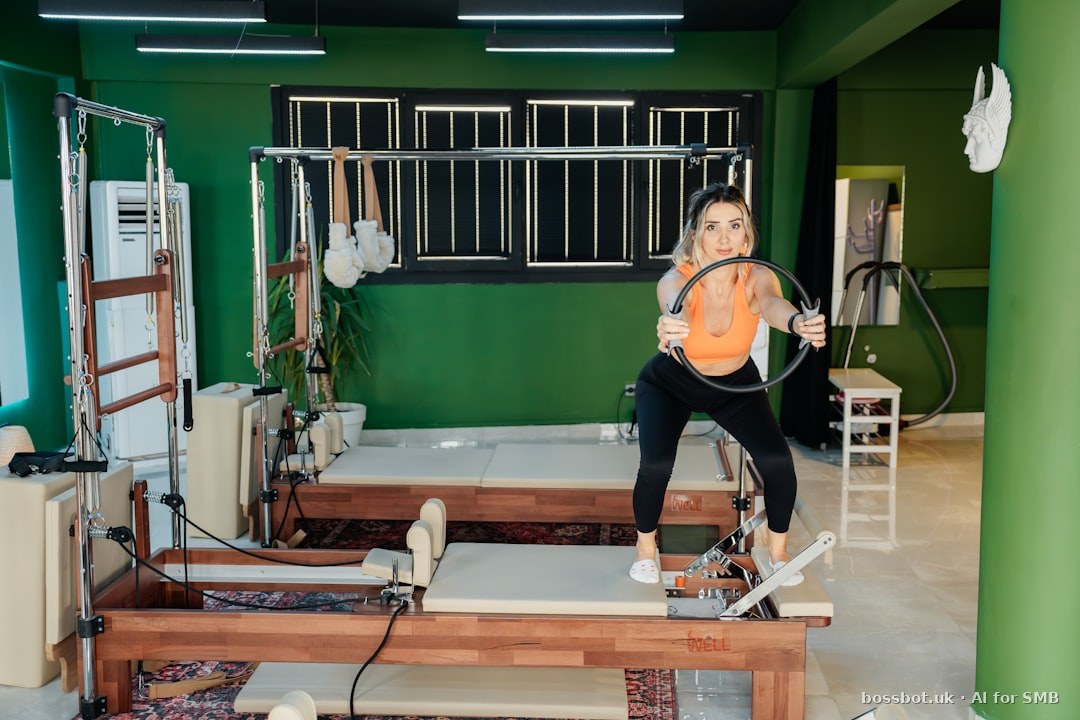
- Reformer, Mat, Chair, and Cadillac: The Pilates Equipment and Method Landscape
- Instructor Training, Certification, and the Nigerian Pilates Professional Landscape
- Corporate Wellness Contracts and Diaspora / Executive Client Segments
- Contraindication Screening for Pre-Natal, Post-Surgical, and Injury-Recovery Clients
- LASAA / MDCN Advertising Boundary and Health-Claim Discipline for Pilates Marketing
- WhatsApp Business Automation Toolkit for Nigerian Pilates Studios: What Works, What to Skip
The Nigerian Pilates Market: Who the Clients Are and How They Communicate
Pilates arrived in Nigeria's urban fitness market in the 2010s and has grown primarily in Lagos and Abuja, concentrated in affluent residential and commercial areas.
Typical Lagos Pilates studio locations: Ikoyi, Lekki Phase 1, Victoria Island, Ikeja GRA, Magodo
Typical Abuja Pilates studio locations: Maitama, Asokoro, Wuse 2, Jabi, Garki 2
Class formats and Nigerian pricing ranges (mid-2026):
- Group reformer classes (6-10 people): ₦12,000-₦25,000 per drop-in session; ₦40,000-₦80,000/month for 8 sessions
- Mat Pilates group classes (10-15 people): ₦5,000-₦10,000 per session; ₦25,000-₦50,000/month
- Private reformer sessions (1-on-1): ₦25,000-₦60,000 per session
- Semi-private sessions (2-4 people): ₦15,000-₦35,000 per session per person
Pricing varies by studio location, equipment quality, and instructor experience. Verify current rates with individual studios.
Client profile: The Nigerian Pilates client is typically a professional between 28-55, often based in the Lagos Island or Abuja high-income corridors. They are comfortable with digital communication, use iPhone or Android, and default to WhatsApp for all service communication — including gym bookings. They expect prompt responses and will move to a competing studio if enquiries go unanswered for more than a few hours.
How clients discover Pilates studios in Nigeria:
- Instagram (the primary discovery channel for Lagos fitness studios)
- Word of mouth / referral
- Google search ('Pilates Lekki', 'reformer Pilates Victoria Island')
Once discovered, contact moves to WhatsApp. The studio's WhatsApp number is typically in the Instagram bio or displayed in posts.
The WhatsApp Communication Flow for a Pilates Studio
A new client enquiry at a Nigerian Pilates studio typically follows this path:
Stage 1 — Initial enquiry:
Client messages: 'Hi, I want to try Pilates. What do you offer?' or 'Do you have reformer classes?' The first response sets the tone. If it arrives more than 2-3 hours after the message, the client may have already booked elsewhere.
Stage 2 — Class information delivery:
The studio sends the class schedule, format descriptions, and pricing. This is the same information sent to every new enquiry — an automated response can deliver it immediately, with a question to qualify: 'Are you new to Pilates, or do you have experience?'
Stage 3 — Trial class or first booking:
Many Nigerian Pilates studios offer a trial session at a reduced rate (₦5,000-₦10,000 for a first mat class, or a discounted first reformer session). Booking confirmation via WhatsApp: date, time, location, what to bring.
Stage 4 — Payment:
For regular memberships: monthly fee collected in advance. For drop-in: per-session payment. Payment method: bank transfer (client transfers and sends screenshot) or Paystack payment link (client pays via card or bank, studio receives notification). Monthly fee follow-up is the most manually intensive payment task — reminding clients when their fee is due.
Stage 5 — Session reminders:
A reminder 24 hours before class and 1 hour before significantly reduces no-shows. In a class of 8 with one empty mat, that's ₦12,000-₦25,000 of unused capacity per session. Automated reminders address this without requiring manual tracking of each client's upcoming schedule.
Stage 6 — Retention communication:
Clients who miss multiple sessions without cancelling are at high dropout risk. A check-in message ('We haven't seen you in two weeks — is everything okay? We have space in Thursday's class if you'd like to come back') is most effective when sent within the first 2-3 weeks of absence. After 4-6 weeks, client re-engagement is significantly harder.
Payment Collection for Nigerian Pilates Studios
Monthly membership model:
Most established Pilates studios in Nigeria operate on a monthly membership with a set number of sessions per month. Fees are due at the start of each month. The manual process: the studio owner or receptionist tracks which clients haven't paid, sends reminders, receives transfer screenshots, and manually reconciles payments against client accounts. A studio with 40-60 active clients has 40-60 payment tracking tasks every month.
Paystack for Pilates studios:
A Paystack merchant account allows the studio to send payment links to clients via WhatsApp. The client clicks the link and pays by card or bank transfer via the Paystack interface. Paystack's dashboard shows confirmed payments. Processing fees: 1.5% + ₦100 per local transaction (capped at ₦2,000). For a ₦60,000 monthly membership, the Paystack fee is ₦1,000 (capped). The tradeoff: 1.67% of revenue goes to Paystack, but manual reconciliation time is eliminated and payment confirmation is automated.
Bank transfer (direct):
For clients who prefer bank transfer, the studio account details are shared in WhatsApp. The client transfers and sends a screenshot. Manual confirmation and reconciliation required. Some studios maintain both options — Paystack link as default, bank transfer for clients who prefer it.
Deposit for new members:
Some studios collect a first-month advance payment at trial stage to secure a recurring spot in a capped class. This is standard practice and protects the studio's capacity planning.
CAC registration:
A Pilates studio operating commercially should be registered with the CAC (Corporate Affairs Commission) as a Business Name or limited company. CAC registration allows opening a corporate bank account in the studio name — more appropriate for client payments than a personal account.
Health Data and NDPA 2023 for Nigerian Pilates Studios
Pilates studios typically collect client health information: injury history, medical conditions (back pain, post-surgery recovery, pregnancy), and movement limitations. This information informs instruction and class placement.
Is health data special-category data under NDPA 2023?
The Nigeria Data Protection Act 2023 (NDPA 2023), Section 30, identifies health data as sensitive personal data requiring a higher standard of protection. Injury history and medical condition data collected by a Pilates studio falls within this category.
What this means for Nigerian Pilates studios:
- Explicit, informed consent is required before collecting health information. A client intake form (paper or digital) with a clear consent statement is the standard approach.
- Health data should be stored securely — not in WhatsApp threads, where it is accessible to anyone with access to the studio phone.
- The data should be used only for the purpose for which it was collected (safe instruction), not shared without consent.
- Clients have the right to access their health data held by the studio, and to request deletion when they leave.
Pilates and medical scope: Pilates instruction is not a medical practice and does not fall under MDCN (Medical and Dental Council of Nigeria) regulation. However, a Pilates instructor should not make clinical claims (diagnosis, treatment) — only provide movement instruction. Clients with significant medical conditions (post-surgery recovery, specific injuries) should be advised to obtain medical clearance before starting.
Data Processing Agreement with WhatsApp automation platforms: Any platform that processes client data (including WhatsApp conversation data with health disclosures) acts as a data processor. A DPA with the platform provider is required under NDPA 2023.
The NDPA 2023 replaced the older NDPR. Enforcement is by the Nigeria Data Protection Commission (NDPC) at ndpc.gov.ng — not NITDA.
Reformer, Mat, Chair, and Cadillac: The Pilates Equipment and Method Landscape
Pilates instruction in Nigeria splits by equipment and format, each with distinct operational implications for a WhatsApp-run booking flow:
- Mat Pilates — no equipment beyond the mat; group class format (typically 8–15 students); accessible price point; foundational method work. The entry-tier format most Nigerian studios use to introduce new students.
- Reformer Pilates — the sliding-carriage apparatus with spring resistance; small-group format (4–8 students per class limited by reformer count); higher price point; the boutique-Pilates signature format that defines the Nigerian studio market.
- Wunda Chair / Combo Chair — vertical spring-based apparatus; specialist small-group or private-session format.
- Cadillac / Trapeze Table — full-body apparatus with overhead frame and multiple spring attachments; private-session format primarily; specialist rehabilitation and advanced practice work.
- Ladder Barrel and Spine Corrector — smaller apparatus for specific spinal-mobility and postural work; typically part of a full-equipment studio's toolkit.
- Tower / Half-Cadillac — space-efficient variant combining reformer with wall-mounted spring bar.
- Small props — magic circles, resistance bands, foam rollers, weighted balls; used across mat and equipment formats.
Method and lineage variations:
- Classical Pilates — Joseph Pilates' original sequence and method taught with close fidelity; specialist practitioners.
- Contemporary Pilates — evolved method incorporating biomechanics research and adaptations; dominant approach in modern boutique studios globally.
- Rehabilitation-focused Pilates — Pilates adapted for injury recovery, post-surgical rehabilitation, and specific-condition management; often delivered by a physiotherapist with additional Pilates training.
Studio-format WhatsApp implications:
- Reformer-class capacity constraint — 4–6 reformers is a typical Nigerian studio count, limiting maximum class size and making booking discipline critical. Every unfilled reformer is ₦12,000–₦25,000 of unrecovered revenue per session.
- Mat-class flexibility — larger group size; more accommodating of last-minute additions; broadcast booking works well.
- Private and semi-private sessions — schedule managed against specific instructor availability; WhatsApp coordinates two-way scheduling between instructor calendar and client.
- Equipment-familiarity screening — new-to-reformer students need an intro session or brief orientation before joining a general reformer class; intake screening captures this.
Instructor Training, Certification, and the Nigerian Pilates Professional Landscape
Pilates instruction is not statutorily regulated in Nigeria (unlike physiotherapy under MRTBN or medicine under MDCN). The international professional-standard references that shape credentialing in the Nigerian Pilates community:
- Pilates Method Alliance (PMA) — international non-profit setting standards for Pilates instruction; PMA-Certified Pilates Teacher (NCPT) is a recognised credential.
- STOTT Pilates (Merrithew) — Canada-based teacher-training and certification brand; comprehensive Pilates Certification programme covering mat and full equipment. Widely referenced credential in Nigerian and African studios.
- Balanced Body — US-based Pilates equipment and education company; comprehensive instructor training and Pilates on Tour ecosystem.
- BASI Pilates (Body Arts and Science International) — international teacher-training school with global affiliate network.
- Peak Pilates — teacher-training and equipment brand.
- Body Control Pilates — UK-headquartered method with international training reach.
- Polestar Pilates — physiotherapy-integrated Pilates training; strong in rehabilitation applications.
- Romana's Pilates — classical-lineage training under Joseph Pilates' protégé.
Nigerian training pathways:
- International training abroad — many Nigerian Pilates instructors have trained in South Africa, UK, US, UAE, or India for comprehensive certification programmes.
- International-brand training in Lagos / Abuja — some Nigerian studios host visiting international instructors for concentrated training modules; STOTT, Balanced Body, and BASI have all had Africa-based training events.
- Bridging apprenticeship + international online modules — mixed pathway combining senior-instructor mentorship in Nigeria with online modules from international programmes.
- Physiotherapy-adjacent Pilates training — MRTBN-registered physiotherapists adding Pilates certification for rehabilitation practice.
WhatsApp Business profile trust signals:
- Certification body prominently listed — 'STOTT-certified Pilates Instructor', 'PMA NCPT', 'BASI Comprehensive Certified', 'Polestar Practitioner'.
- Years of teaching experience — 'teaching Pilates in Lagos since 2015' anchors credibility.
- Specialty designation — pre-natal certified, rehabilitation-Pilates specialist, sports-Pilates focus, senior-adaptation specialist.
- Studio affiliation and lineage where applicable.
- Physiotherapy dual credential where relevant ('MRTBN-registered physiotherapist with BASI Comprehensive Pilates') signals rehabilitation-safety expertise for post-surgical clients.
Corporate Wellness Contracts and Diaspora / Executive Client Segments
Nigerian Pilates studios operate three distinct enterprise-tier client segments beyond the walk-in and monthly-member base:
Corporate wellness contracts:
- On-site or nominated-studio programme — Tier-1 bank HQs, oil-and-gas headquarters, Lekki tech-corridor employers, PR / consulting firms, international-organisation offices subsidise Pilates for staff either on-site (rare — requires equipment) or via a nominated-studio partnership (studio bills employer + employee co-pay).
- Mat Pilates on-site — the more common corporate on-site format given equipment portability; delivered as 45–60 minute lunch or after-work sessions for 8–15 employees.
- Executive one-to-one at office — some Tier-1 executives contract for weekly private Pilates at their office; premium rate.
Diaspora and expat client segment:
- Diaspora returnees — Nigerian professionals returning from London, US, UAE with existing Pilates practice; expect equivalent studio standards and equipment quality.
- Expat community — Lagos and Abuja expat client base sensitive to instructor certification, class quality, and international-standard equipment; Ikoyi and Maitama concentration.
- Short-stay international business travellers — hotel-guest Pilates via drop-in at nearby studio; typically premium walk-in rate.
Physiotherapy-referred client segment:
- Post-orthopaedic rehabilitation — knee replacement, hip replacement, spinal fusion, rotator cuff, meniscectomy patients referred by their MRTBN-registered physiotherapist for Pilates as adjunct rehabilitation. Requires instructor with rehabilitation-Pilates training and a working referral relationship with the physiotherapist.
- Post-natal pelvic-floor recovery — obstetrician or physiotherapist referral; specialist instructor training required.
- Chronic-condition management — hypermobility, chronic low-back pain, scoliosis, osteoporosis-adapted Pilates for management (not treatment) under referring-clinician guidance.
WhatsApp workflow for enterprise segments:
- HR / EA / clinician liaison thread — dedicated WhatsApp channel with the employer's HR / benefits lead, executive assistant, or referring physiotherapist for scheduling and enrolment coordination.
- Attendance reporting — periodic report to HR / physiotherapist for corporate or referred clients (with client consent).
- Employer vs employee invoice clarity — clear billing lines; corporate procurement runs on POs and formal invoices even when operational relationship is WhatsApp.
- Cross-referral discipline — a physiotherapy-referred client's Pilates progress communicated back to the referring physiotherapist with the client's consent, maintaining continuity of care.
Contraindication Screening for Pre-Natal, Post-Surgical, and Injury-Recovery Clients
Pilates is a physical practice with specific contraindication zones — situations where a session is inappropriate, delayed pending medical clearance, or requires specialist instructor and modified programming. The WhatsApp intake flow captures these signals or the instructor discovers them mid-session.
Pre-natal Pilates:
- First trimester — many pre-natal-specialist instructors decline first-trimester students; specialist training pathway informs individual practice.
- Second and third trimester — accepted with modified programming (no supine after 16–20 weeks, no prone, no deep abdominal work, no strong twists, modified abdominal-loading, side-lying dominant, avoid forceful spring resistance loading of the pelvic floor).
- High-risk pregnancy — placenta previa, gestational hypertension, gestational diabetes, cervical incompetence, threatened preterm labour — obstetrician clearance required, and some contraindications are absolute regardless.
- Post-natal — 6-week medical clearance minimum standard (extended for C-section recovery to 8–12 weeks; longer for complicated delivery); diastasis recti assessment before core-loading exercises.
Post-surgical rehabilitation Pilates:
- Post-orthopaedic surgery (knee replacement, hip replacement, spinal fusion, rotator cuff, meniscectomy, ACL reconstruction) — surgeon clearance and physiotherapist referral required before Pilates. Rehabilitation-Pilates specialist instructor recommended, not general group class.
- Post-cardiac event / cardiac rehabilitation — cardiologist clearance; cardiac-rehabilitation-programme completion typically precedes Pilates initiation.
- Post-cancer treatment — oncologist clearance; specialist onco-Pilates awareness.
Chronic-condition considerations:
- Hypermobility syndromes (Ehlers-Danlos, joint hypermobility syndrome) — specialist programming to build stability without pushing into extreme range; certified instructor with EDS/JHS experience important.
- Osteoporosis — no flexion (forward-fold), no strong twists, avoid loading spine in flexion; modified programming per bone-density DEXA and specialist guidance.
- Chronic low-back pain — assessment of pain pattern (mechanical vs radicular) before programming; often benefits from Pilates but under careful instructor.
- Scoliosis — modified programming per Schroth or Pilates-scoliosis specialist approach.
- Uncontrolled hypertension / cardiac arrhythmia — cardiologist clearance before vigorous cardiac-loading exercises.
- Herniated / prolapsed disc (acute phase) — often contraindicated for extension-loading exercises during acute phase.
WhatsApp intake screening template (sent at first-visit booking):
'Before your first Pilates session, a quick health-check: (1) Are you pregnant or in postnatal recovery (please note weeks)? (2) Any recent surgery, injury, or ongoing medical condition (spinal condition, joint replacement, cardiac, hypertension, diabetes, osteoporosis, hypermobility, cancer treatment)? (3) Any doctor's or physiotherapist's advice about exercise limitations? (4) Any specific concern or goal? Confidential under NDPA 2023 — shared only with your instructor to programme safely.'
Refer-don't-diagnose discipline:
- Pilates instructor is not a medical practitioner and does not diagnose or treat. Where disclosed condition needs clinical assessment, refer to GP, MRTBN-registered physiotherapist, or specialist before scheduling.
- Specialist instructor assignment (pre-natal certified, rehabilitation-Pilates trained) for clients with specific needs; not teacher-of-the-day handoff.
- Session-day re-check — brief pre-session check catches change since booking; medication changes, symptom flare, unexpected new symptom all warrant modified session or reschedule.
LASAA / MDCN Advertising Boundary and Health-Claim Discipline for Pilates Marketing
Pilates sits in a similar advertising position to yoga — a physical practice with well-documented physiological benefits that is nonetheless not medical treatment. Nigerian Pilates studios marketing on WhatsApp Status, Instagram, Facebook, and boosted ads should know the boundaries.
MDCN-adjacent health-claim boundaries:
- Do NOT claim Pilates treats or cures medical conditions — 'Pilates cures back pain', 'Pilates eliminates scoliosis', 'Pilates heals disc herniation', 'Pilates reverses osteoporosis' are the class of claim MDCN and consumer-protection regulators review.
- DO describe general wellness benefits factually — core strength, postural awareness, spinal mobility, flexibility, balance, breath awareness.
- Do NOT represent as physiotherapist or medical professional — Pilates instructor is a distinct role; the scope-boundary vs MRTBN-registered physiotherapy matters legally and reputationally. A Pilates instructor who is also an MRTBN-registered physiotherapist can describe both credentials but should not blur the roles.
- DO refer for medical questions — 'Pilates can be a helpful complement — please get clearance from your GP or physiotherapist first; we can then work with your medical team's recommendations'.
- DO avoid before-and-after weight-loss dramatic claims — Pilates is not a weight-loss modality primarily; framing it as such invites platform-policy scrutiny and misleads students on outcomes.
LASAA (Lagos State Signage and Advertisement Agency):
- Outdoor signage — studio signage in Lagos falls under LASAA regulation; permits and design standards apply.
- Vehicle branding, banners, event signage — same LASAA scope.
Meta / Instagram / TikTok platform-policy discipline:
- Boosted ads making therapeutic claims attract platform review and may be rejected under health and wellness policy.
- Body-transformation claims — regulated advertising with genuine-documentation and consent requirements; factual framing over dramatic transformation.
- Testimonials — must be genuine, appropriately consented, non-misleading.
Safe posture for Pilates marketing:
- WhatsApp Status to opted-in members — direct communication with consenting students; wide latitude for instructor voice and studio culture.
- Public Instagram and Facebook content — factual practice content, instructor introductions, class highlights (with participant consent), method and equipment education, studio culture.
- Boosted paid promotions — describe classes and offerings factually without therapeutic claims; comply with platform health and wellness policy.
- Educational content — pose breakdowns, breath work, biomechanics primers, spring-tension explanations — generally welcomed and low regulatory risk.
WhatsApp Business Automation Toolkit for Nigerian Pilates Studios: What Works, What to Skip
Free WhatsApp Business App handles a solo instructor or 2-instructor boutique studio (up to ~30 active member threads):
- Business profile with studio name, instructor certification (STOTT / Balanced Body / BASI / PMA), equipment (reformers count, mat, chair, Cadillac availability), location, hours, portfolio / class schedule link.
- Quick replies for recurring templates: intake screening, class schedule delivery, trial-session booking, monthly membership renewal, session cancellation policy, contraindication follow-up, injury-recovery specialist assignment.
- Labels — 'New Enquiry', 'Trial Booked', 'Active Member', 'Payment Awaited', 'Session Confirmed', 'Membership Renewal Due', 'Pre-Natal', 'Rehab-Referral', 'Lapsed'.
- Away message for after-hours with class-schedule reference and response-time expectation.
- Broadcast list (max 256 opted-in members) for weekly class schedule, workshop announcements, membership renewals.
WhatsApp Business API via BSP appropriate for larger studios, multi-location operations, or multi-instructor programmes:
- WATI, respond.io, Interakt, AiSensy — BSP options; monthly SaaS + Meta conversation pass-through (~$0.055 marketing / ~$0.020 utility per session for Nigeria).
- Shared team inbox — critical for multi-instructor studios where different specialists handle pre-natal / rehab / general programme streams.
- Scheduled sending — 24h and 1h session reminders; monthly membership renewal reminders 7 and 2 days pre-expiry; workshop reminders; retreat announcements.
- Booking-platform integration — Mindbody, Momence, Fresha, PocketPT for schedule management with WhatsApp-BSP integration via Zapier or native connector.
- Paystack recurring billing (merchant-side) — the studio configures a Paystack Recurring Charges plan on its own Paystack dashboard against a card the member authorised at signup; each month, the WhatsApp layer fires a reminder ahead of the scheduled charge with a fresh payment link if the saved card needs updating. The charge and the saved-card mandate live with Paystack; WhatsApp is the reminder surface, not the payment processor.
What to skip:
- AI auto-diagnosis of student health concerns — instructor does not diagnose. Concerning disclosure or symptom routes to medical referral, not chatbot triage.
- Auto-assignment of pre-natal / rehab-referral clients to general classes — specialist instructor assignment is a human decision requiring intake review.
- Auto-broadcast to non-opted-in students — NDPA violation and boutique-community damage.
- Compression of first-visit contraindication screening — even for a 'just try one class' student, the health-screening questions get asked before scheduling.
- Weight-loss-focused urgency marketing — misframes Pilates and attracts platform-policy review.
Core principle: automate acknowledgement, class-schedule delivery, session reminders, membership renewal reminders, and community broadcasts; keep intake screening, contraindication triage, specialist instructor assignment, and any sensitive client conversation human. Pilates is a boutique practice — the WhatsApp layer supports the instructor's clinical judgment and community-building, not replaces them.
Sources
Data + numbers referenced in this article are sourced from these public documents:
- Pilates Method Alliance (PMA) — Certification Standards
- STOTT Pilates (Merrithew) — Instructor Training
- Balanced Body — Pilates Instructor Training
- BASI Pilates — Body Arts and Science International
- Lagos State Signage and Advertisement Agency (LASAA)
- Paystack — Nigeria Merchant Pricing
- Meta — WhatsApp Business Platform Pricing
Frequently Asked Questions
Automate Pilates Bookings and Monthly Fee Collection on WhatsApp
Class schedule delivery, Paystack payment links, and session reminders — so you're teaching, not managing repetitive WhatsApp messages.
See How BossBot WorksNot ready to sign up yet? Try the free demo →