WhatsApp for Nail Salons in Egypt: The 2026 Reality on Instagram Handoff,
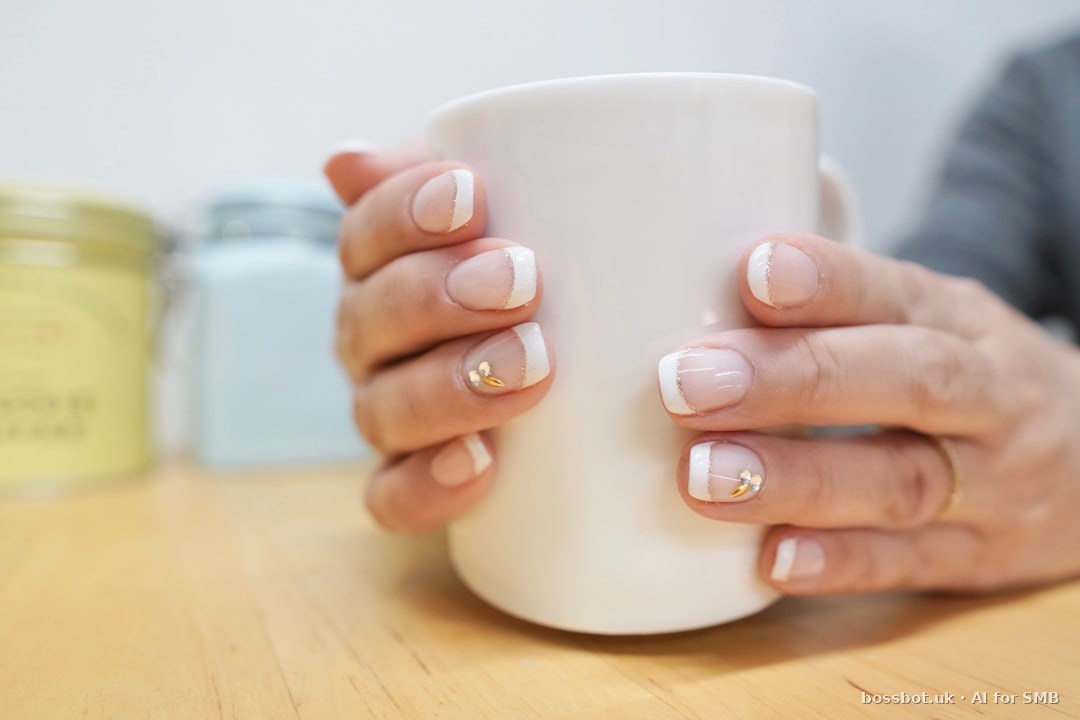
How Cairo and Alexandria nail salons run WhatsApp Business in 2026 — Instagram DM handoff, deposit discipline, Ramadan scheduling, and Egyptian
- The Instagram-to-WhatsApp handoff is the actual funnel
- Why deposits matter more in Egypt than in other markets
- Ramadan scheduling is a template category, not an edge case
- What WhatsApp Business Platform actually costs in Egypt
- Personal Data Protection Law 151 of 2020: what applies
- The metric that separates growing salons from stagnant ones
- What to keep off automation
The Instagram-to-WhatsApp handoff is the actual funnel
Nail salons in Cairo, Alexandria and Giza operate on a two-platform reality that generic guides tend to miss: discovery happens on Instagram, transactions happen on WhatsApp. A Cairene client typically finds a salon through Reels, saves the reference to a Story highlight, then messages either the salon's Instagram DMs or the WhatsApp number printed in the bio. Salons that treat this as one funnel — with a designed handoff — outperform those treating Instagram and WhatsApp as separate channels.
The practical implication is that WhatsApp Business setup for an Egyptian nail salon starts before the client message arrives. The Instagram bio needs a wa.me link with a pre-filled inquiry text (something short, in Egyptian Arabic, that identifies the service the client saw). Meta's Business Suite allows automated first-response templates that recognise the pre-filled text and route the conversation to the right price sheet or catalogue item. Salons that skip this step ask their receptionist to type the same three responses hundreds of times a week and lose bookings during peak IG-referral hours (typically 20:00 to 23:00 local time).
DataReportal's Digital 2024 Egypt report places WhatsApp usage among Egyptian internet users well above 90 percent, and Instagram usage above 80 percent for the beauty-and-lifestyle audience specifically. In practical terms, the funnel is not a choice — it is the default consumer path.
Why deposits matter more in Egypt than in other markets
Egyptian nail salons operate against two headwinds that make deposit discipline a business-survival question rather than a preference.
The first is the Egyptian pound's volatility. Central Bank of Egypt inflation bulletins through 2024 recorded consumer-price inflation figures that at times exceeded 30 percent year-on-year, with the EGP repricing significantly against the US dollar in the March 2024 float. Salons cannot absorb no-shows on premium services (gel extensions, nail art at EGP 800 to 2,500 range) when the cost of imported product — Kiara Sky, OPI, IBD, LED-cured gels — is repriced monthly.
The second is a cultural pattern that the industry has been vocal about: relatively high no-show rates for high-ticket beauty services in Cairo and Alexandria, particularly for evening appointments booked more than seven days in advance. There is no single authoritative statistic on this in Egypt (it is not the kind of thing published by the Central Agency for Public Mobilization and Statistics), but the industry pattern is consistent enough that most established salons now require a partial deposit — typically 20 to 30 percent of the service value — held via Instapay or Vodafone Cash before confirming an evening slot.
WhatsApp automation carries the weight here. A booking template that automatically requests the deposit, sends the payment instruction, and only confirms the appointment upon receipt does two things: it filters out casual inquiries at the point they become expensive, and it creates a client contract that survives the client changing their mind two hours before the appointment.
Ramadan scheduling is a template category, not an edge case
For roughly one month of the year, Egyptian nail salons operate a shifted schedule. Trading hours typically compress into two windows: a morning shift (10:00 to 14:00) for pre-iftar preparation appointments and a heavy evening shift (21:00 to 02:00) for post-tarawih visits. Weddings and Eid preparations push demand for gel extensions, chrome finishes, and nail art dramatically upward in the final ten days of Ramadan.
Salons that treat Ramadan as a template category rather than a manual override tend to preserve staff sanity and reduce booking errors. The pattern that works is: separate WhatsApp appointment-reminder templates for the Ramadan period, with different timing (a same-day reminder at 18:00 for the evening shift rather than a 24-hour advance reminder that would land at 22:00 the night before), and dedicated menu items for Eid-preparation packages (typically bundled: manicure + pedicure + gel + basic art at a fixed price).
Meta's WhatsApp Business Platform accepts multiple approved template versions, which allows salons to swap the active reminder template on the first of Ramadan and revert on Eid al-Fitr without technical intervention.
What WhatsApp Business Platform actually costs in Egypt
Meta's 2025 pricing update sets per-conversation rates for WhatsApp Business Platform on a per-country basis. Egypt sits in a mid-tier pricing band. Utility conversations — the category that covers appointment confirmations, reminders, deposit receipts, and status updates — are priced at roughly USD 0.012 per conversation in Egypt at the time of writing (rates should be verified on Meta's official WhatsApp Business Pricing page as they are revised periodically).
Marketing conversations — promotional broadcasts, seasonal offers, package launches — are priced higher and subject to stricter opt-in enforcement. Meta actively polices marketing-category messages for evidence of client consent; salons that repurpose contact lists across services (nail salon plus adjacent beauty offering) without re-consenting the list risk phone-number-level messaging restrictions.
For a nail salon running approximately 400 utility conversations per month (bookings, deposits, reminders, receipts) plus 100 marketing conversations (seasonal promotions), the Meta fee sits in the range of USD 6 to 15 per month. The main cost of automation for a salon is the software layer — the Business Solution Provider or CRM connected to Meta's API — not Meta's per-message fees themselves.
Personal Data Protection Law 151 of 2020: what applies
Egypt's Personal Data Protection Law No. 151 of 2020 sets the compliance floor for automated messaging. The Personal Data Protection Center under the Ministry of Communications and Information Technology is the enforcement body. Salons should be aware of four provisions in practice.
Explicit consent for automated processing of personal data is required — implicit consent through a walked-in appointment is not a defence for marketing broadcasts. Consent should be collected in Arabic at the point of first booking, either via a signed paper intake form or a digital opt-in.
Data minimisation applies. A salon does not need a client's national ID number or full address to send an appointment reminder; collecting more than necessary creates compliance exposure without operational benefit.
Cross-border data transfer restrictions apply if the CRM stores client data on servers outside Egypt (as most WhatsApp Business Solution Providers do). Compliance under the current framework requires documented safeguards; small salons should choose providers that publish their data-hosting arrangements clearly.
Breach notification obligations exist. In the event of a data compromise, salons are expected to notify the Personal Data Protection Center within a defined window. Practices should have an incident-response note on file even if the risk feels remote.
The metric that separates growing salons from stagnant ones
Nail salon owners often measure the wrong thing. WhatsApp Business dashboards report message open rates (which for utility conversations approach 100 percent — the client already had a booking) and reply rates (which reflect client attentiveness more than business health). Neither predicts salon profitability.
The metric that separates a growing salon from a stagnant one is deposit-to-appointment conversion rate: the percentage of clients who, after being asked to send a deposit via WhatsApp automation, actually do so within the two-hour window most salons set. Salons with rates above 70 percent are running a viable premium-service pipeline. Rates below 50 percent typically indicate one of three underlying problems: unclear service pricing on the Instagram funnel, deposits perceived as unusually high relative to the salon's positioning, or a payment method (Instapay account, Vodafone Cash number) that clients cannot verify or trust.
Moving this number is more valuable than optimising open rates, reminder timings, or template wording. Any salon investing in WhatsApp automation should be able to report this figure monthly.
What to keep off automation
The client relationship in a nail salon is unusually high-touch. Automating the wrong thing damages retention more directly than a missed reminder ever would.
Specific content that should stay in human hands: recovery messaging after a service that went wrong (a lifted gel, an infection, a colour mismatch); condolences or life-event acknowledgements for regular clients whose milestones the receptionist knows; birthday messages that mention nothing specific (a templated 'Happy Birthday' from a salon reads worse than none at all); and any escalation to a specific technician's schedule (client requests should be routed by a human, not confirmed by a bot).
The division that operational salons converge on: automate the transaction layer (bookings, deposits, reminders, receipts, waitlist offers when a slot opens) and reserve human attention for anything that touches the salon's reputation for care. Clients notice.
Sources
Data + numbers referenced in this article are sourced from these public documents:
Frequently Asked Questions
BossBot for Beauty Salons & Barbers
Product page with honest feature list, "not for you if" filter, and live demo for this vertical.
See /for/beauty-salon →BossBot for Egyptian nail salons
WhatsApp Business Platform automation with Instagram handoff, deposit request templates, Ramadan schedule swaps, and PDPL 151/2020-compliant consent flows. Seven-day free trial, no card required.
Start Free TrialNot ready to sign up yet? Try the free demo →