The Empty Chair: US Hair Salon No-Show Economics and WhatsApp
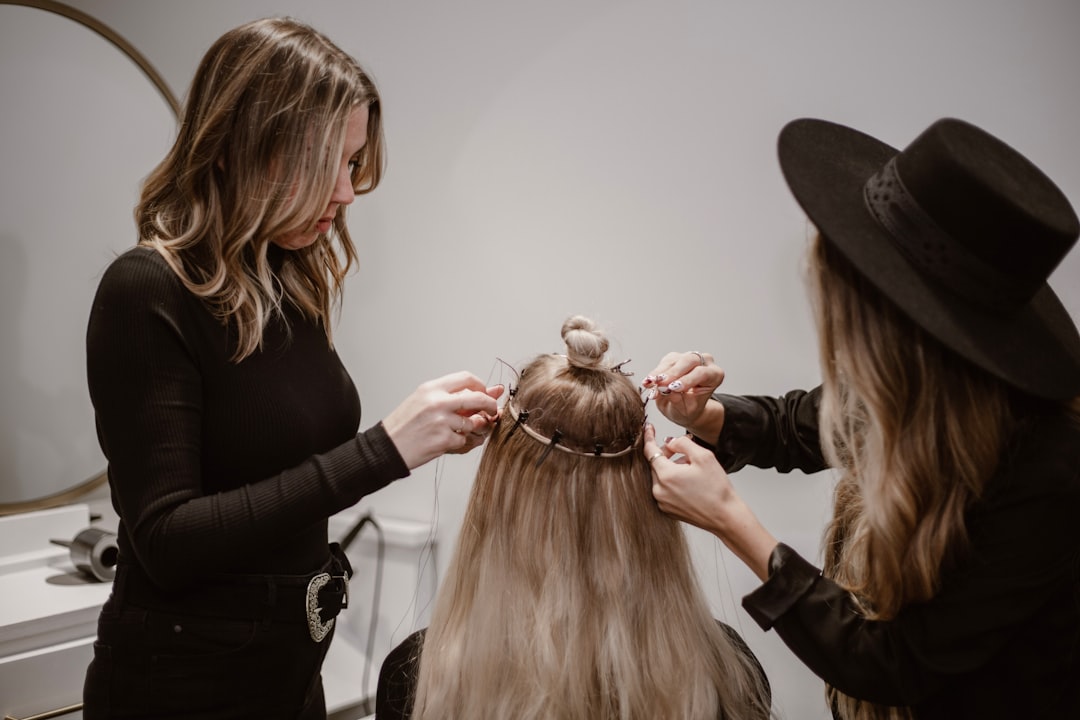
US hair salons run on chair-time economics — every empty booking is straight loss. A forensic look at TCPA, chair-rent math, and where WhatsApp fits.
- Chair-Time Economics: How Independent US Hair Salon Revenue Actually Works
- The No-Show Math: How a US Hair Salon Chair Actually Loses Money
- TCPA, WhatsApp, and the Reminder-Channel Regulatory Line
- Where WhatsApp Actually Reaches a US Hair Salon Patron Base (and Where It Does Not)
- The Salon Software Stack: Booksy, Vagaro, Boulevard, Fresha, Square Appointments, StyleSeat vs Direct WhatsApp
Chair-Time Economics: How Independent US Hair Salon Revenue Actually Works
A thirty-minute cut slot at a mid-market US metro hair salon carries realized production in the $60–$120 range; a two-and-a-half-hour full-color session lands in the $180–$450 range depending on stylist tier and metro. The US professional beauty industry generates approximately $90–100 billion in annual revenue and employs roughly 1.4 million licensed cosmetologists, per Professional Beauty Association operator surveys and IBISWorld industry reporting. Independent salons — the operational category most exposed to no-show economics — dominate the industry structure: solo stylists renting a booth, and 3-to-6 chair studios where every scheduled slot carries direct revenue exposure.
The dominant business model is booth (chair) rental, not commission. Under booth rental, a stylist pays a fixed monthly rent to the salon owner (commonly $150–$500 per month in secondary US metros, $500–$1,500+ in Los Angeles, New York, San Francisco, and other high-cost metros) and keeps 100% of service revenue and product sales. The stylist operates as an independent contractor for IRS purposes, files Schedule C, pays self-employment tax on Form 1040 SE, and carries the full economic loss of any no-show or last-minute cancellation. Salon-side income is the booth rent and product commissions; salon-owner responsibility for reminder cadence is structurally weaker under this model because the salon does not lose revenue on a specific empty chair.
The alternative is commission, in which the salon takes a defined percentage of service revenue (commonly 40–60% depending on stylist tenure) and provides supplies, marketing, front-desk, and booking infrastructure. Under commission, the salon owner directly bears the no-show loss and typically operates the reminder system centrally. This model persists in franchised and chain salons and in higher-end independent salons that recruit stylists on infrastructure rather than autonomy.
The distinction matters for reminder-system design. A booth-rental salon needs a reminder infrastructure that stylists can operate at their own booth level, with individual opt-in flows and per-stylist template customization. A commission salon can centralize reminder infrastructure at the salon-owner level with a single opt-in policy. A software vendor selling only the centralized model misses roughly two-thirds of the US independent-salon operator market.
Fixed overhead — occupancy, front-desk labor where applicable, sanitation supply, license renewal, insurance — does not pause when a chair sits empty. Bureau of Labor Statistics Consumer Expenditure data has consistently placed household spending on personal care services in the $700–$900 annual range per household, cyclical but recession-resilient. Every reserved-and-empty chair-time slot is a straight subtraction from the operator's realized income against overhead that runs regardless.
The No-Show Math: How a US Hair Salon Chair Actually Loses Money
Broken-appointment rates at US independent hair salons vary by service type, day of week, patron demographic, and reminder discipline. Industry operator surveys and reporting in Modern Salon, Salon Today, and Professional Beauty Association materials have placed no-show rates for booked services in the range commonly cited between eight and fifteen percent across independent salons, with substantial variation. Consultation appointments and blowout-only slots book at the higher end of the range; longstanding recurring color-and-cut appointments book at the lower end. New-client appointments show materially higher no-show risk than returning-patron appointments.
The economic anatomy of a no-show extends beyond the empty slot. Consider a Thursday afternoon color appointment at a mid-market metro salon:
- Direct revenue loss: the $180–$450 in unrealized service production for the two-and-a-half-hour slot.
- Product cost sunk on prep: color mixed and now unusable if the specific formulation cannot be repurposed within its stability window (typically 30–60 minutes for demi-permanent formulations).
- Walk-in opportunity cost: the two-and-a-half-hour slot cannot be filled at short notice because color booking requires advance product allocation and consultation.
- Front-desk labor: already dispatched for the appointment window.
- Client-acquisition-cost recycle risk: first-time and second-visit no-shows are correlated with permanent churn; if the client does not rebook within thirty days, industry consultancy reports place the return probability at materially below thirty percent.
The economic response most US independent salons default to is a two-touch reminder cadence — a 48-hour reminder and a 24-hour confirmation touch — combined with a stated cancellation policy (typically 24-hour advance notice or a 25–50% deposit forfeiture). Credit-card holds against defined no-show fees are widespread across upmarket color and men's-grooming concepts and are the most economically consequential no-show intervention operators can implement, but they require patron acceptance at booking that typical mid-market salons have hesitated to introduce.
Automated reminder messaging is the operational leverage that scales the two-touch cadence without adding front-desk labor. But it operates inside a US federal and state regulatory framework that governs how the reminder message reaches the patron, and that framework differs materially between SMS and over-the-top channels like WhatsApp.
TCPA, WhatsApp, and the Reminder-Channel Regulatory Line
The Telephone Consumer Protection Act (47 U.S.C. § 227) governs calls and text messages placed to US mobile telephone numbers using an automatic telephone dialing system or an artificial/prerecorded voice. For SMS-based appointment reminders sent by a US hair salon to a patron mobile number, the applicable consent standard is prior express consent for informational content (a confirmation of a scheduled appointment) and prior express written consent for marketing content (a broadcast promotional message). FCC interpretive guidance treats appointment confirmations as informational when the message body stays focused on the confirmation and does not carry additional promotional solicitation.
WhatsApp is over-the-top messaging over an internet data connection and is generally not governed by TCPA in the way SMS is. WhatsApp messages are not text messages placed to a mobile telephone number in the § 227 statutory sense. This is the doctrinal position articulated in the companion TCPA analysis and is the framework most US messaging-compliance counsel apply. Three separate frameworks continue to bind WhatsApp-based salon messaging: Meta's own WhatsApp Business Platform opt-in requirements (stricter than TCPA in some respects), FTC Section 5 deceptive-practices standards, and state consumer-protection statutes.
State mini-TCPAs. Florida's Telephone Solicitation Act (FTSA), California's Invasion of Privacy Act (CIPA at Penal Code § 632 and § 632.7), Oklahoma's Telephone Solicitation Act, and Washington's Consumer Protection Act have been read in litigation to reach automated business messaging in ways federal TCPA does not clearly cover. A hair salon in Miami, Los Angeles, San Francisco, Oklahoma City, or Seattle sending automated WhatsApp broadcasts to prior patrons should have counsel review the consent flow before deployment, particularly for any message that reads as promotional rather than confirmation.
State cosmetology board rules. Each US state licenses cosmetology through a state board — the California Board of Barbering and Cosmetology, the New York State Division of Licensing Services, the Texas Department of Licensing and Regulation Cosmetology Program — that governs advertising, service claim accuracy, and stylist-patron communication within the scope of the licensed practice. Board rules commonly reach representations of stylist credential, service outcomes, and product safety claims. A WhatsApp broadcast that says your color will last twelve weeks carries the same board-rule accuracy standard as a printed brochure. Reminder messages limited to appointment confirmation content stay well within board-rule tolerance.
The operational consent stack most defensible under this combined framework captures four elements at patron intake: written or unambiguous-conduct consent to receive reminder messages via the elected channel (SMS, WhatsApp, or email), the specific message frequency and content types the patron is opting into, an easy opt-out mechanism (STOP reply for SMS, opt-out link for WhatsApp), and a separately-signed marketing-broadcast consent for any promotional message beyond appointment confirmation.
Where WhatsApp Actually Reaches a US Hair Salon Patron Base (and Where It Does Not)
For a US hair salon deciding whether WhatsApp belongs in the reminder stack, the honest positioning is that WhatsApp is a segment channel rather than a universal channel in the US market. Meta and Statista have reported approximately 80–90 million WhatsApp users in the United States, materially fewer than the near-universal reach of SMS. Coverage concentrates in identifiable patron segments:
- Urban immigrant and Hispanic communities. A hair salon in Little Havana, East Los Angeles, Washington Heights, Houston's Third Ward, or predominantly Latino neighborhoods across the sun-belt metros will see WhatsApp adoption approaching daily-communication default for a substantial share of the patron list.
- South Asian and Middle Eastern diaspora communities. WhatsApp is the default cross-family communication channel across these communities globally, and US-diaspora patrons carry the same daily-use pattern.
- International-student university markets. WhatsApp coverage in Boston, Ann Arbor, Berkeley, Cambridge, Los Angeles, and other university-adjacent salon markets skews high for the student patron segment.
- Under-forty urban patrons broadly. Coverage is higher than the US average but not dominant.
Where WhatsApp reaches thin coverage: suburban and rural salons serving over-fifty patron demographics, small-town midwestern and southern markets, and general-market salons in metros without a substantial immigrant community. In these markets, SMS remains the workhorse reminder channel — near-universal deliverability, 90%+ open rates across industries, A2P 10DLC standardization at approximately $0.0079 per outbound US message through Twilio, MessageBird, or comparable A2P vendors.
Three US hair salon archetypes illustrate the segmentation:
The urban-community salon operates a WhatsApp-first booking and reminder flow because the patron base already uses WhatsApp for family and neighborhood communication. Confirmation reply rates are materially higher than SMS or email. Rebooking often happens conversationally in the same thread. The salon rarely encounters a patron who cannot receive WhatsApp.
The multi-stylist urban metropolitan salon operates a dual reminder stack: SMS for the majority patron segment, WhatsApp for the opted-in segment that self-identifies as WhatsApp-primary at intake. Booking software (Vagaro, Booksy, Boulevard) drives the reminder cadence through each channel per patron preference.
The suburban premium salon operates SMS and email as the primary reminder channels and does not offer WhatsApp because the patron base is over-fifty iPhone-primary and does not use the app. Attempting to run a WhatsApp reminder flow in this market wastes template-approval and BSP-setup investment for reach that does not exist.
Operators should not assume the segmentation without a patron survey. A quick intake question — what messaging channel do you prefer for appointment reminders? — collected across sixty intake conversations gives a directional read on which channel investment fits the actual patron base.
The Salon Software Stack: Booksy, Vagaro, Boulevard, Fresha, Square Appointments, StyleSeat vs Direct WhatsApp
For a mid-size US independent hair salon (three to six chairs, 400–800 appointments per month), the salon-focused software stack and the direct-messaging alternative compare across published pricing and consumer-marketplace exposure as follows.
Booksy publishes pricing in the approximate range of $29 to $59 per month per user depending on tier, with the primary strategic differentiator being the Booksy consumer-app marketplace that drives discovery-based bookings to salons listed in the app. For salons whose new-patron acquisition comes materially through the Booksy app, the marketplace is the value driver; for salons whose new-patron flow is Instagram-and-referral-driven, the app-marketplace layer adds less economic value.
Vagaro publishes pricing in the approximate range of $30 to $90+ per month depending on the number of bookable calendars and selected modules, with strengths in integrated payment processing, marketing tools, and multi-location support. Vagaro operates its own consumer marketplace of variable regional strength.
Boulevard publishes enterprise-focused pricing typically $175+ per month per location with materially higher functional depth (integrated payments, in-depth reporting, patron-facing self-service portal, waitlist automation). Boulevard positions for salons and med-spas with $1M+ annual revenue rather than the median independent operator.
Fresha operates a subscription-free base with monetization through payment-processing markup (approximately 2.19% + $0.20 per transaction for card-not-present processing) and paid add-on services. Attractive base pricing for cash-flow-constrained operators with the trade-off that the vendor economically depends on payment volume through the platform.
Square Appointments bundles booking with the broader Square POS ecosystem at $29 to $69 per month plus payment-processing fees, attractive for salons that already run Square for payments.
StyleSeat operates a flat approximately $35 per month per stylist subscription with a consumer marketplace of moderate US reach, positioned toward booth-renting stylists building an individual patron base rather than salon-owner operators.
Direct-channel messaging stack. For salons running their own reminder infrastructure alongside (rather than through) a salon-focused platform, the direct-channel messaging cost lands materially below the entrenched vendor stack:
- SMS through Twilio A2P 10DLC at approximately $0.0079 per outbound US message × two-touch cadence on 600 monthly appointments = approximately $10 per month in raw message cost plus 10DLC registration.
- WhatsApp Business Platform through Meta at approximately $0.008–$0.014 per US utility conversation × the opted-in patron segment = typically $3–$10 per month in raw conversation fees for a segment-appropriate salon.
- Email through SendGrid or Postmark at under $5 per month for the reminder-plus-newsletter volume.
Total stack cost for a mid-size US independent salon typically lands in one of three configurations: entrenched marketplace-integrated platform ($200–$600/month all-in depending on chair count and add-ons), middle-tier platform with basic messaging ($60–$180/month), or direct-channel-only via a general messaging platform ($30–$100/month plus staff time for template maintenance).
The economic decision is rarely dominated by per-message cost. It is dominated by (1) how much of the salon's new-patron flow comes through the marketplace vendor's consumer app (a hard-to-replicate distribution channel), (2) whether the operator's chair-rental or commission structure benefits from centralized reminder infrastructure versus stylist-level flexibility, and (3) whether the patron demographic actually uses the channel the platform prioritizes. A vendor with a beautiful WhatsApp integration whose patron base is Midwestern iPhone-primary is not a good fit; a marketplace-heavy vendor whose salon does not use the marketplace is not a good fit either.
Sources
Data + numbers referenced in this article are sourced from these public documents:
- Professional Beauty Association (PBA) — industry research and operator data
- IBISWorld — Hair Salons in the US industry report
- Modern Salon — industry reporting and operator surveys
- Salon Today — salon business intelligence
- 47 U.S.C. § 227 — Telephone Consumer Protection Act (Cornell LII)
- FCC — TCPA guidance and consumer protection
- Booksy — salon booking platform pricing
- Vagaro — salon and spa software pricing
- Boulevard — salon and med-spa enterprise platform
- Fresha — subscription-free booking and payment platform
- Square Appointments — bundled booking and POS pricing
- StyleSeat — stylist-focused booking marketplace
- WhatsApp Business Platform — pricing (US utility and marketing conversation rates)
- Twilio — SMS pricing for the United States (A2P 10DLC)
- Statista — Number of WhatsApp users in the United States
Frequently Asked Questions
BossBot for Beauty Salons & Barbers
Product page with honest feature list, "not for you if" filter, and live demo for this vertical.
See /for/beauty-salon →Map your reminder stack against the segment of your patron base that actually uses each channel.
Not ready to sign up yet? Try the free demo →