WhatsApp for Barbershops in the Philippines: 2026 Guide to Payday Rushes,
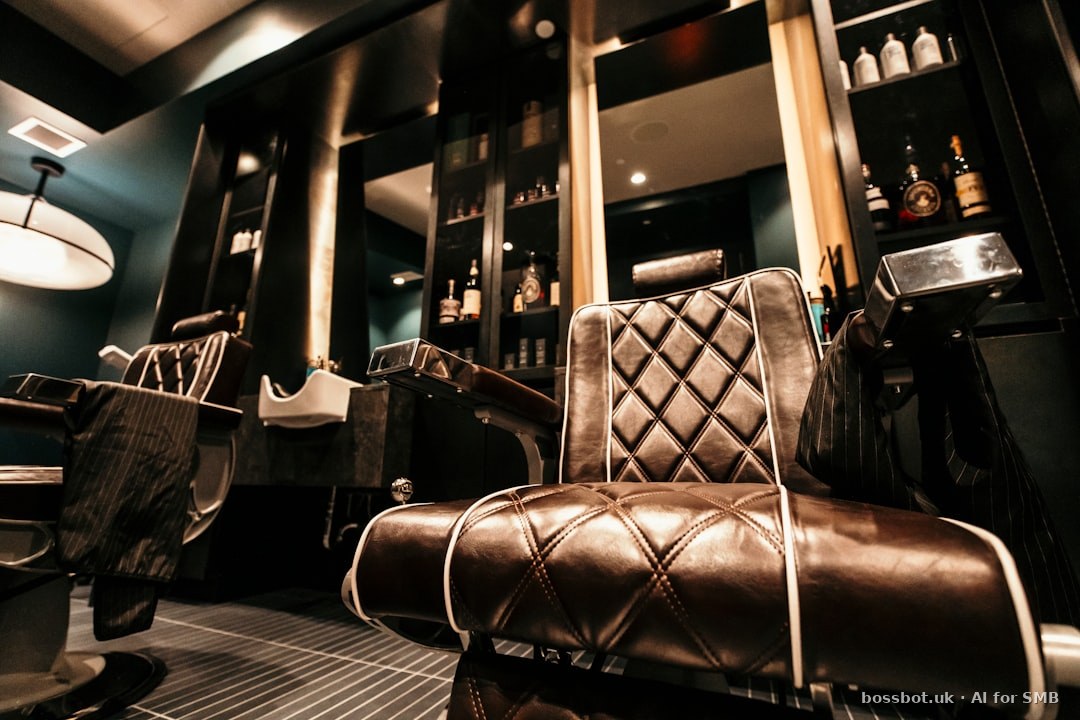
How Philippine barbershops use WhatsApp Business in 2026 — 15th-and-30th payday rush cycles, GCash advance booking, walk-in queue visibility, BIR OR
- The 15th-and-30th payday rush shapes Philippine barbershop demand
- GCash, Maya, InstaPay: the deposit and payment layer
- BIR OR delivery: the post-service compliance step
- Queue visibility as a competitive advantage during peak times
- RA 10173 and NPC guidance: the compliance floor
- What WhatsApp Business Platform costs a Philippine barbershop
- The metric that predicts Philippine barbershop growth
The 15th-and-30th payday rush shapes Philippine barbershop demand
Philippine employment payroll cycles cluster heavily around two dates: the 15th of the month and the last day of the month (typically the 30th, or 28th/31st depending on the month). This is set out in Philippine labour practice: the Labor Code requires payment of wages at least twice a month, and most companies default to 15th/end-of-month cycles. Discretionary consumer spending — including barbershop visits — spikes noticeably in the days immediately following each payday.
Metro Manila barbershops, particularly in BGC, Ortigas, Makati, Alabang, and Ayala Avenue districts, see peak demand on paydays and the two days that follow. Saturday demand is heavy year-round; the days after Ondoy or Kris Kringle payday releases can double normal Saturday walk-in volume. Shops that plan capacity around this pattern retain clients; shops that treat every Saturday as identical alienate walk-ins by waiting-time.
WhatsApp automation for a Philippine barbershop should be designed around this rhythm. Two automation categories matter:
Queue visibility during peak days. A prospective client arriving Saturday afternoon has three options: walk in and hope, ask the shop the queue length, or skip to a competitor with a shorter line. Automated responses to 'ilan po ang naghihintay?' or 'how long is the wait?' with current queue count, estimated wait, and an optional 'reserve my spot' virtual queue button capture the walk-in that would otherwise be lost.
Advance booking with GCash deposit for premium services. Fade-and-beard combinations, hair coloring, and specialty treatments in the PHP 400-1,200 range benefit from advance booking with a small (PHP 100-200) GCash deposit that filters casual bookers from serious ones. The deposit is fully credited against the final service.
GCash, Maya, InstaPay: the deposit and payment layer
GCash is the dominant consumer e-wallet in the Philippines with high penetration across the customer age range that visits barbershops. Maya (formerly PayMaya) is a strong secondary. GrabPay integration exists but is less consistently used for local retail service payments.
For a barbershop, WhatsApp automation should support three payment scenarios:
Advance deposit for booking. A GCash QR code embedded in the WhatsApp booking confirmation, with the deposit amount (PHP 100-200 typically) and the applied-to-service note. Client scans, pays, deposit confirmed via GCash API webhook, booking locked. Same pattern works for Maya.
On-service payment via QR scan at the chair. A physical GCash/Maya QR code at the chair, or InstaPay via the shop's bank details, or cash. Automation post-service dispatches an OR (see next section) with a note of payment method used.
For higher-value services (bundled packages, member-tier subscriptions), InstaPay or PESONet bank-to-bank transfer works for clients who prefer a bank rail. Automation dispatches the shop's bank details on request.
GCash and Maya are both Bangko Sentral ng Pilipinas-supervised electronic-money institutions with defined transaction limits per tier. For typical barbershop deposit and service amounts, both operate within their retail-transaction ranges without friction.
BIR OR delivery: the post-service compliance step
Bureau of Internal Revenue (BIR) requires business-registered establishments to issue Official Receipts (ORs) for services rendered. Philippine barbershops registered with the BIR — most established shops in Metro Manila are — must issue ORs to clients.
BIR has progressively expanded the eBIR system permitting electronic OR issuance. Barbershops enrolled in eBIR generate ORs electronically; those not enrolled use physical BIR-approved receipt booklets.
WhatsApp automation handles OR delivery in both cases:
For eBIR-enrolled shops: after service completion and payment, automation generates the electronic OR via the eBIR API and dispatches the PDF via WhatsApp with the payment method and amount recorded. This eliminates the receptionist typing the client's name (which introduces errors) and creates a searchable receipt trail.
For manual-OR shops: automation dispatches a photograph of the manually-issued OR (with the client's name and amount) with a note that the original physical copy is available at the counter. This also serves clients who want a digital record of their spending.
Corporate clients or freelance professionals requesting ORs for expense claiming appreciate this delivery step, particularly when the shop is in a business district. It reduces awkward post-service 'may I have my OR?' follow-ups and captures clients who would otherwise skip requesting an OR they need.
Queue visibility as a competitive advantage during peak times
Philippine barbershops in high-density retail locations (BGC, Ayala, Ortigas, Alabang) compete for the same weekend and payday-week walk-in traffic. A prospective client who walks into a busy Saturday afternoon at Shop A, sees a 45-minute wait, and walks out to try Shop B nearby has just moved revenue between shops.
WhatsApp automation captures this before it happens. A well-implemented queue-visibility flow works as follows:
The shop's booking system tracks current chairs occupied and clients waiting. The automation exposes this via a WhatsApp message that any client can trigger with 'queue?' or 'ilan po?' — returning the current wait estimate in minutes.
A 'reserve my spot' option accepts a 20-minute virtual hold. Client taps to reserve, gets a code, and can arrive within 20 minutes to claim the spot. If they don't arrive, the spot returns to the walk-in queue.
At 15 minutes remaining wait, automation messages the client 'your turn in ~15 min, you can head over now'. This lets the client optimise their nearby coffee break, mall wander, or work-from-nearby-cafe time.
At 5 minutes, automation sends a final 'your chair is opening — please head to counter'.
This pattern converts walk-in browsers to actual customers at scale. Shops using this flow during Saturday and payday-week peaks capture revenue that competitors on the same block are losing to their queue opacity.
RA 10173 and NPC guidance: the compliance floor
Republic Act 10173 (Data Privacy Act of 2012), administered by the National Privacy Commission (NPC), applies to Philippine barbershops processing client personal data — name, phone number, service history, sometimes payment method identifiers.
Four operational implications:
Consent for processing personal data is required. Barbershops should collect client consent at first visit (paper form, tablet-signed form, or WhatsApp welcome message confirmation) covering: booking reminders, promotional broadcasts, and any data sharing (e.g., with a payment processor).
Data subject rights (access, correction, deletion, opposition) must be honoured within NPC-defined response windows. A client who requests deletion from the shop's WhatsApp broadcast list must be removed.
Data minimisation applies. Barbershops do not need the client's full home address, date of birth, or employment details to run appointment reminders. Collecting more than necessary creates NPC exposure.
Breach notification obligations exist. In the event of a data compromise (a phone list leaks, a receptionist's device is compromised), the shop is expected to notify the NPC and affected clients per NPC guidelines. The NPC has issued sanctions to Philippine businesses for RA 10173 violations.
What WhatsApp Business Platform costs a Philippine barbershop
Meta's 2025 pricing update sets Philippines per-conversation rates at approximately USD 0.0217 for utility conversations. For a typical Metro Manila barbershop with 200 to 500 monthly clients running utility conversations for booking, queue visibility, deposit collection, and OR delivery, monthly utility conversation volume is typically 400 to 900.
At this volume, Meta's fees fall in the USD 8 to 20 monthly range. Marketing conversations — payday-week promotions, seasonal broadcasts (Christmas rush prep, Holy Week schedule), member-tier launches — cost more per conversation.
A well-run Philippine barbershop typically generates several hundred pesos in incremental revenue per Saturday from queue-visibility conversions alone. WhatsApp automation costs are a small fraction of the operational uplift. Current rates should be verified on Meta's WhatsApp Business Pricing page.
The metric that predicts Philippine barbershop growth
Philippine barbershops often measure the wrong things. Total WhatsApp message volume grows naturally with active clients. Instagram engagement reflects visibility, not chairs filled.
The number that predicts a Philippine barbershop's growth is member-tier subscription rate: the percentage of active clients who subscribe to an unlimited-cuts monthly package or a discounted-package subscription (typically PHP 1,500-3,000 per month for unlimited standard cuts, or 4-pack cuts at a discount).
Member-tier subscriptions convert one-time transactions into recurring revenue, dramatically improve visit frequency (a subscribed client visits 3-4x per month versus 1x for a walk-in), and create predictable capacity planning that walk-in-only shops cannot match.
Shops with member-tier subscription rates above 15 percent of active clients are running structurally growing businesses. Rates between 5 and 15 percent are functional but suggest untapped upside. Rates below 5 percent, sustained across quarterly review, indicate either weak subscription positioning (client sees no clear value), weak service-quality retention (client won't commit to a package because uncertain of consistent service), or pricing outside the client's willingness to prepay.
WhatsApp automation moves this number through post-service messaging: after the third visit within 60 days, automation dispatches a member-tier offer specific to the client's typical service pattern (unlimited cuts, cuts-plus-beard package, cuts-plus-hair-color package). This is different from broadcast promotions and should be measured separately.
Any Philippine barbershop investing in WhatsApp automation should report member-tier subscription rate monthly. Movement in this number over three to six months indicates structural business growth.
Sources
Data + numbers referenced in this article are sourced from these public documents:
Frequently Asked Questions
BossBot for Beauty Salons & Barbers
Product page with honest feature list, "not for you if" filter, and live demo for this vertical.
See /for/beauty-salon →BossBot for Philippine barbershops
WhatsApp Business Platform automation with queue-visibility flows for Saturday and payday-week peaks, GCash/Maya advance deposit templates, BIR eBIR OR delivery, member-tier subscription prompts, and RA 10173-compliant consent. Seven-day free trial, no card required.
Start Free TrialNot ready to sign up yet? Try the free demo →